
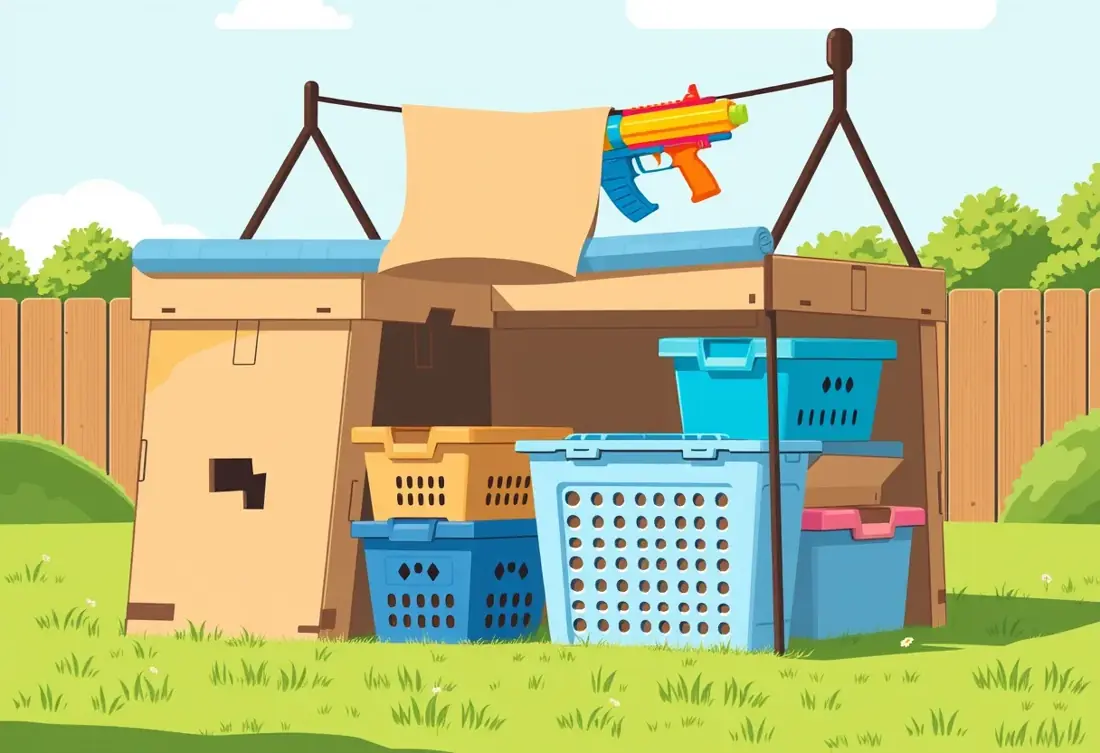
A blaster game gets better the moment there is something to hide behind. You do not need lumber or a trip to the store. Most of what makes a good fort is already in the garage, the recycling pile or the laundry room. This guide covers what to grab, how to lay it out, how high is safe, and what to leave out.
Everything here is for toy foam, gel and water blaster games. Check the age rating on your blasters (foam is the right choice for mixed ages, and the gel blasters in our catalog are rated 14+ by their makers), and put eye protection on every player before the first shot.
Materials you probably already have
- Cardboard boxes. Appliance and moving boxes are the best walls you will ever get for free. Flatten the thin ones, keep the big ones standing.
- Laundry baskets. Turned upside down they are low cover; right side up they are a crouching spot and an ammo bin in one.
- Plastic storage bins. Stack two high at most, lids on, and keep the stack wider than it is tall.
- Pool noodles. Cut to length they pad every sharp corner and mark boundaries that nobody trips over.
- A bedsheet or tarp on a clothesline. A “cloak” screen that blocks line of sight. Hang it above head height on the ends so nobody runs into it.
- Cones, buckets and garden pots. Plastic only, empty, used as bases and markers.
- Patio furniture. Lightweight chairs and a picnic table on its side can work as cover only if an adult says it is stable and it cannot tip onto a player.
- An empty kiddie pool. Dropped flat on the grass it becomes a foxhole, a flag base or the place spare darts are kept.
A 15-minute build plan
- Walk the yard first. Pick a flat area clear of the pool, the street, the grill, the fire pit, tree roots and anything breakable. Move the garden hose and toys off the grass.
- Mark two bases. Put each base at opposite ends with a neutral zone of about 20 to 30 steps between them. Use cones or pool noodles on the ground.
- Build low walls. Stand boxes and baskets in short staggered lines, not one long wall. Gaps force players to move, and moving keeps the game fun.
- Add one tall piece per base. A sheet screen or the biggest box acts as a “headquarters” where the flag lives.
- Test it. Have an adult push on every wall. If it wobbles, lay it down or tape the base to the grass with a weight on it.
A simple layout that works for 6 to 10 players:
- Base A: a big box and two baskets in a semicircle.
- Neutral zone: three scattered obstacles (a bin on its side, two baskets).
- Base B: a mirror of base A.
How high is safe?
Keep walls no higher than a player’s shoulder when crouched behind them, and never above an adult’s chest. Taller structures tip, and a fort is not something to climb. If a kid wants a lookout, use a lawn chair on the ground with an adult nearby, not a stack.
What not to use
- Anything with nails, staples, exposed screws, glass, sharp plastic or metal edges.
- Heavy things that could fall: ladders, concrete blocks, bags of soil, big potted plants.
- Anything you would not want covered in grass stains and foam darts, since it will be.
- Trampolines, climbing frames and swing sets as part of the fort.
- Items that block exits or hide a player completely from the adult supervising.
Keep it fair
Rebuild the fort when the teams swap sides. Add a rule that cover cannot be moved during a round, and agree on one “reset” break where everyone can fix their walls. If you are planning the whole afternoon, the plan a Nerf war guide has a full 60-minute schedule, and the backyard war rules cover hit calls and boundaries.
Want the blasters sorted too? The two-team backyard war loadout is a ready-made set for the game. Local rules vary; check yours before you buy or play.
Frequently asked questions
How big should the fort be? Big enough for two or three players to crouch behind and small enough that an adult can see all of it. Several small pieces beat one big wall.
Can we use a tent or a play tent? Use it as a base marker, not as cover. A tent hides players from the supervising adult, which makes it harder to keep everyone safe.
What if it rains? Cardboard collapses when it gets wet, so use plastic bins and baskets on wet days, and skip the sheet screens, which are slippery when soaked.
Does the fort go back in the garage afterward? Yes. Flatten the cardboard for the recycling bin and gather every dart so none end up in the lawnmower.