
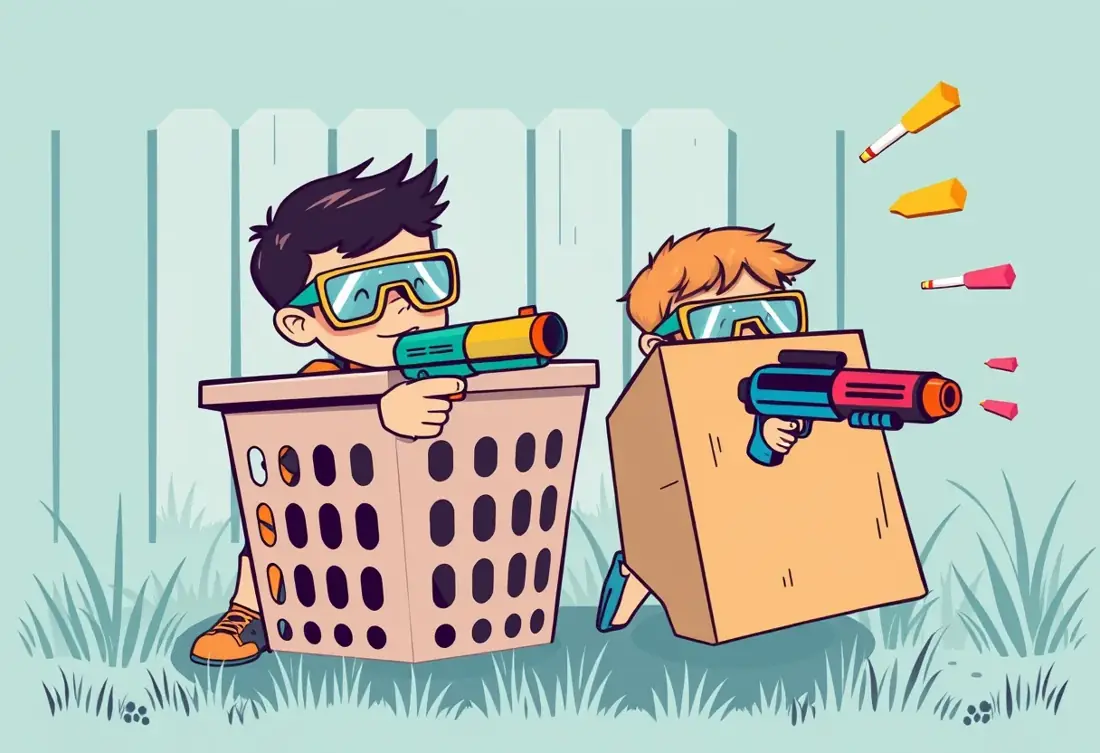
Winning a blaster game is mostly about not getting hit. This guide is for toy foam, gel and water blaster games, and it is about staying in the game: using cover, moving smartly, working as a team and guarding your base. Nothing here is about the real world. It is all about getting the most out of an afternoon in the yard.
The first defense is the boring one: eye protection. Every player wears clear safety goggles every round. Check the age rating on your blasters too: foam suits mixed ages, and the gel blasters in our catalog are rated 14+ by their makers.
Cover beats speed
A player who stands in the open loses to a player who is partly hidden, even if the first one is faster.
- Pick cover before you need it. As you cross the yard, always know your next hiding spot.
- Stay low. Crouch behind a laundry basket, a box or a bin. Only your eyes and blaster should show.
- Lean, do not stand. Peek around the side of the cover instead of over the top. It exposes much less of you.
- Do not hug one spot. If someone keeps shooting at your cover, move to a different one.
You can build better cover in minutes: the backyard blaster fort guide shows how, and the DIY shields guide has simple handheld options.
Move between cover
- Choose the next cover first.
- Wait for the other team to reload or turn their attention.
- Move in a short, low dash, then drop behind the next piece.
Never run with your eyes down, and never sprint on wet grass or near hard edges. A fall is worse than any hit. Walk-run, watch your footing, and slow down near cones and bins.
Dodging basics
- Keep your hips loose and your feet moving. Standing flat-footed makes you an easy target.
- Change direction in small steps. Quick side steps are enough. A big lunge is how ankles get hurt.
- Use obstacles to break line of sight. If you cannot see them, they cannot hit you.
- Dodge safely. No jumping over furniture, over bins or off steps.
Roles that make a team stronger
In a team of five or six, giving everyone a job keeps the group organized:
- Defender. Stays near the flag or base and watches for runners.
- Scout. Looks around the edges, calls out where the other team is.
- Runner. Goes for the other team’s flag, always with a teammate covering.
- Reloader. Collects darts and keeps spare ammo at base.
Switch roles each round so nobody is stuck doing the least fun one.
Defend your base
- Keep one defender within a few steps of the flag at all times.
- Build a second line of cover behind the first, so a runner has to deal with more than one obstacle.
- Agree on a signal for “runner coming” so the whole team reacts together.
- If your blaster is empty, retreat to base and reload instead of staying in the open.
Reload and retreat
Plan where the dart pile is before the game starts. Practice a simple retreat: move back behind cover, reload, then return from a different side. A calm, planned retreat beats a panicked one every time.
Fair play
Call your own hits, honestly. Raise a hand and walk back to base. The backyard war rules guide has a full hit-call system and boundary rules, and the plan a Nerf war guide shows how to run the whole afternoon.
Tactics by age and ability
- Younger players (8 to 10). Short rounds, simple roles, one big cover piece per base, and a grown-up referee.
- Older kids and teens. Add flags, second lines of cover and team signals. The challenge comes from planning, not from speed.
- Mixed groups. Pair a younger player with an older one as partners, and give younger players the defender role.
Local rules vary; check yours before you buy or play.
Frequently asked questions
What is the most useful single thing to do? Wear your goggles every round. After that, stay low and always know your next cover.
Should I run or walk? Short, controlled dashes between cover. Constant running tires you out and leads to falls.
Is a shield better than cover? Cover is cheaper and safer. A light cardboard shield helps with moving cover, and the DIY shields guide shows how to make a safe one.
How do we keep arguments about hits down? Call your own hits, play short rounds and have an adult referee. It keeps things friendly.